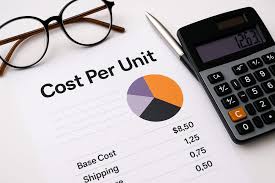
Cost per use is a way to figure out the real cost of an item or service based on how many times you use it. It helps you see if something is a good deal over its life. You calculate it by dividing the total cost by the number of times you use it. This helps make smarter buying choices.
What is Cost Per Use?
Cost per use is a simple idea. It looks at how much you pay for something each time you use it. Think of it like renting.
You pay a fee to use something for a short time. Cost per use does this for things you own.
This method helps you see the value of your purchases. A cheap item used often can be more expensive in the long run. A pricier item used a lot might be a better deal.
It shifts your focus from the initial price tag to the long-term benefit.
We often buy things without thinking about how much we’ll actually use them. Then, they sit in a closet or garage. Cost per use makes us think ahead.
It encourages buying quality items that last and that we will actually reach for.
This way of thinking applies to almost anything. It works for clothes, tools, appliances, gym memberships, or even digital subscriptions. It’s a powerful tool for smarter budgeting.
Let’s dive deeper into why this matters so much for your wallet and your life. Understanding the math behind it is key.
Why Cost Per Use Matters So Much
In my own life, I remember buying a really fancy coffee maker. It was a big splurge. I loved the idea of making cafe-quality drinks at home.
But after a few weeks, the novelty wore off. It sat there, collecting dust. The initial cost was high, and the number of times I actually used it was low.
When I did the math, the cost per cup was way more than I’d pay at a coffee shop. That was a hard lesson learned!
That experience taught me a lot. It showed me that the sticker price isn’t the whole story. Cost per use helps uncover hidden expenses.
It reveals how value changes over time with usage.
This is especially true for things you buy for a hobby or a special occasion. You might only use them a few times a year. Or maybe you buy something because it’s on sale, thinking you’ll find a use for it.
Cost per use forces you to be honest about your needs and habits.
It also helps you appreciate things you already own. That trusty old jacket you wear almost every day? It might have cost a bit upfront.
But if you wear it for years, its cost per wear is tiny. That’s great value. It encourages mindful consumption.
You buy less junk and more of what truly serves you.
Thinking about cost per use can also make you a better gift-giver. Instead of a trendy gadget that might be forgotten, you might choose something practical and durable. Something that will be used and appreciated for a long time.
It’s not just about saving money. It’s about getting the most out of your resources. It’s about making choices that align with your values and your lifestyle.
The Cost Per Use Equation: Simple Math
The basic formula is easy:
Cost Per Use = Total Cost / Number of Uses
Let’s break down each part:
- Total Cost: This is what you paid for the item.
- Number of Uses: This is how many times you actually use it.
It sounds simple, but figuring out “Number of Uses” can be tricky. We’ll explore that next.
How to Calculate Cost Per Use: A Step-by-Step Guide
Let’s walk through how to actually do this. It’s not complicated, but it requires a little thought. We’ll use a common example: a pair of running shoes.
Step 1: Know the Total Cost.
You bought a great pair of running shoes for $120. That’s your total cost. Make sure you include any taxes or shipping fees if you want a precise number.
Step 2: Estimate the Number of Uses.
This is the part that needs some estimation. How many times will you use these shoes? For running shoes, a common estimate is based on miles.
A good pair of running shoes can often last between 300 to 500 miles.
Let’s say you plan to run about 15 miles per week. Over a year, that’s 15 miles/week * 52 weeks/year = 780 miles.
If your shoes last about 400 miles, you’ll need about two pairs per year (780 miles / 400 miles/pair = 1.95 pairs).
So, for the purpose of calculating the cost of that one pair of shoes, we can consider the “number of uses” to be 400 miles. Or, if you prefer to think in terms of runs, and you run 3 times a week, and the shoes last for 100 runs, then your number of uses is 100.
For simplicity, let’s say you estimate you’ll get 100 runs out of these shoes before they’re worn out. That’s your estimated number of uses.
Step 3: Do the Math.
Now, plug those numbers into the formula:
Cost Per Use = $120 / 100 runs
Cost Per Use = $1.20 per run
So, for every time you go for a run in those shoes, it’s costing you about $1.20. This feels much more manageable than just looking at the $120 price tag.
What if you don’t run that much?
Suppose you only run 5 miles per week. That’s about 260 miles per year. If the shoes still last 400 miles, you’ll wear them out in about 1.5 years.
The number of runs would be less.
If you get 70 runs out of them instead of 100:
Cost Per Use = $120 / 70 runs
Cost Per Use = Approximately $1.71 per run
See how the cost per use goes up? This tells you that if you don’t use them as much, the shoes become less of a good deal per run.
This estimation is the tricky part. But even a rough estimate is better than no estimate at all. It helps you compare things.
Quick Scan: Cost Per Use Examples
| Item | Total Cost | Estimated Uses | Cost Per Use |
|---|---|---|---|
| Good Blender | $150 | 500 Smoothies | $0.30 per smoothie |
| Basic T-shirt | $20 | 50 washes/wears | $0.29 per wear |
| Power Drill | $100 | 10 projects | $10.00 per project |
Note: ‘Uses’ are examples and will vary greatly.
Estimating “Number of Uses”: Where the Art Comes In
The hardest part of cost per use is estimating the “number of uses.” This isn’t always a simple count. Sometimes it’s about time, sometimes it’s about specific tasks, and sometimes it’s about a lifespan.
For Clothing:
You can estimate based on how many times you’d realistically wear an item. A shirt might be worn 30-50 times before it looks old or worn out. A fancy dress for a wedding might only be worn once or twice.
That single-use dress will have a very high cost per wear.
For Tools and Appliances:
Think about the projects you’ll do with a tool. Will you use that drill for 10 home improvement projects? Or maybe 50 small DIY fixes?
For an appliance like a dishwasher, you might estimate the number of loads over its expected lifespan. A dishwasher might last 10 years with 3 loads a week. That’s 3 loads/week 52 weeks/year 10 years = 1560 loads.
If it cost $600, the cost per load is about $0.38.
For Subscriptions and Memberships:
This is often easier. For a gym membership at $50 per month, if you go 10 times a month, it’s $5 per visit. If you only go 4 times, it’s $12.50 per visit.
For streaming services, you can think of it per hour of entertainment.
For Experiences:
This is harder but still possible. A season pass to an amusement park might cost $300. If you go 10 times during the season, it’s $30 per visit.
If you only go twice, it’s $150 per visit. This helps decide if the pass is truly a good deal for you.
The “Lifespan” Approach:
Sometimes, instead of discrete “uses,” you think about the item’s total lifespan. For furniture, you might estimate how many years it will last. A $1000 sofa that lasts 10 years has an annual cost of $100.
If you replace it every 3 years, you’re spending more overall for shorter use.
The key is to be as realistic as possible. Don’t overestimate how much you’ll use something. Be honest about your habits.
This is where personal experience and self-awareness come in. It’s about understanding your own behavior.
If you’re unsure, it’s often better to be conservative with your “number of uses” estimate. This will give you a higher, more realistic cost per use. It protects you from overspending.
Contrast: Overspending vs. Smart Spending
Myth: The cheapest item is always the best deal.
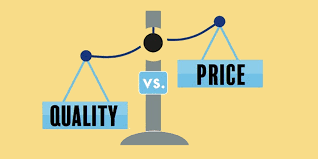
Reality: The item with the lowest cost per use, even if it has a higher initial price, is often the better deal.
Consider a $20 pair of shoes that fall apart after 10 wears (cost per wear = $2.00). Compare that to a $100 pair that lasts for 100 wears (cost per wear = $1.00). The more expensive pair is the better value here.
Real-World Context: Where Cost Per Use Shines
In my own home, I’ve applied this thinking to many purchases. When my old toaster oven finally gave out, I looked at replacements. I could get a basic one for $50, or a fancier convection toaster oven for $150.
I bake a lot of small things and often reheat leftovers. I figured I’d use the convection one at least 5 times a week.
The basic toaster oven might last 5 years. Let’s say 5 uses/week 52 weeks/year 5 years = 1300 uses. Cost per use = $50 / 1300 = about $0.04.
The convection toaster oven might also last 5 years. 5 uses/week 52 weeks/year 5 years = 1300 uses. Cost per use = $150 / 1300 = about $0.11.
Now, the fancier one seems more expensive per use. But I also considered features. The convection oven toasts more evenly, bakes faster, and can fit a small pizza.
This means I might use it more often, maybe 7 times a week.
7 uses/week 52 weeks/year 5 years = 1820 uses. Cost per use = $150 / 1820 = about $0.08.
This revised calculation made the $150 oven look much better. It offered more functionality that would increase its usage. It became the smarter buy for my lifestyle, even with a higher upfront cost.
It wasn’t just about the numbers; it was about how the item fit into my daily life.
This is why understanding your habits is crucial. If you rarely cook or bake, that convection oven would just be an expensive appliance. But for someone like me, it’s a workhorse that saves me time and energy.
It becomes a great value.
The environment where you use things also matters. A tool bought for occasional DIY might be used more heavily if you’re a contractor. A piece of clothing bought for a tropical vacation won’t get much use in a cold climate.
Context is everything.
Observational Flow: Making a Purchase Decision
- Identify Need: Do I really need this?
- Research Options: Look at different brands and models.
- Note Prices: Write down the cost of each.
- Estimate Uses: How often will I use each? Be realistic!
- Calculate Cost Per Use: Use the formula.
- Consider Quality & Durability: Will this last?
- Factor in Added Value: Does it offer features I’ll use?
- Make Decision: Choose based on value, not just price.
What This Means for You: When It’s Normal and When to Worry
When Cost Per Use is Your Friend:
It’s normal and helpful to use cost per use for things you buy regularly or expect to use for a long time. This includes:
- Clothing and shoes
- Tools and equipment
- Appliances
- Furniture
- Vehicles
- Subscriptions and memberships
When you calculate cost per use for these items, you gain clarity. You can compare a high-quality, durable item to a cheaper, less durable one. You can see if that monthly subscription is actually worth the money based on your engagement.
When to Be Cautious or Worry:
Sometimes, cost per use isn’t the only factor. You might worry if:
- Your “Number of Uses” is Always Very Low: If you buy something with the best intentions but consistently find you use it only a handful of times, that’s a red flag. It suggests you might be overspending on items that don’t fit your lifestyle.
- The Initial Cost is Prohibitive: While a high-quality item might have a low cost per use over its lifespan, if you can’t afford it upfront, it’s not a viable option. This is especially true for large purchases like cars or major appliances.
- The Item’s Lifespan is Unclear: For some trendy items or products with unknown durability, estimating lifespan or uses can be very hard. This makes cost per use less reliable.
- You’re Using It to Justify Bad Purchases: Don’t use cost per use as an excuse to buy things you don’t need. It should be a tool for making smart choices about necessary or highly desired items.
Simple Checks You Can Do:
- Track Your Usage: For a month, try to note how often you use certain items. This can give you better data for your cost per use calculations.
- Review Past Purchases: Look at items you bought a year or more ago. How often have you used them? What was their cost per use? This can inform future decisions.
- Compare “Cost Per Wear” for Clothes: This is a popular version of cost per use for fashion. It helps you see if that expensive dress is really worth it if you’ll only wear it once.
The goal is not perfection, but better awareness. Cost per use is a guide, not a rigid rule. It helps you see the bigger picture of your spending.
Quick Fixes & Tips for Smarter Spending
Using the cost per use idea can lead to some smart habits. Here are some tips to make it work for you.
Tip 1: Embrace Quality Over Quantity.
Often, spending a bit more upfront on a well-made item means it will last much longer. This leads to a lower cost per use. Think of it as an investment.
Tip 2: Be Honest About Your Habits.
Don’t overestimate how much you’ll use something. If you love cooking but only have time on weekends, factor that into your “uses” estimate. Your real habits are key.
Tip 3: Consider Secondhand or Refurbished.
You can get great value by buying items used. A second-hand designer bag or a refurbished laptop can offer a much lower initial cost, leading to an even lower cost per use.
Tip 4: Borrow or Rent When Possible.
For items you’ll only need once or twice, like a specialized tool or formal wear, borrowing from friends or renting is almost always cheaper than buying. This is the ultimate low cost per use!
Tip 5: Think About “Cost Per Hour” for Entertainment.
For entertainment options, like video games, movies, or streaming services, consider the cost per hour of enjoyment. A $60 video game you play for 100 hours costs $0.60 per hour. A $15 movie ticket might be $15 per hour if the movie is only 1 hour long.
Tip 6: Use Depreciation as a Guide.
For big purchases like cars, depreciation is a major factor. A car that loses half its value in 3 years costs a lot more “per year” than one that holds its value better, even if the purchase price was similar.
Tip 7: Don’t Forget Maintenance.
Sometimes, the “total cost” includes ongoing maintenance or repair costs. Factor these into your cost per use if they are significant.
These tips help you apply the cost per use principle beyond just a simple calculation. They guide your purchasing behavior.
Stacked Micro-Sections: Choosing Wisely
Durable Goods: Focus on items built to last. They save money long-term.
Occasional Use: For things you need rarely, explore renting or borrowing first.
Digital Services: Check your actual usage versus subscription cost. Are you paying for more than you use?
Personal Projects: If buying tools, consider the number of projects you’ll tackle.
Wearable Items: Invest in classic styles and good materials for clothes. They stay in rotation longer.
Frequent Questions About Cost Per Use
Is cost per use only for expensive items?
No, cost per use is helpful for items of all price points. While it’s often used for larger purchases, it can also show you that cheap, frequently replaced items can end up costing more over time. It’s about the value you get for the money spent, no matter the initial price.
How do I estimate the number of uses for something like a couch?
For items like furniture or appliances, it’s often easier to think about their lifespan in years. You can estimate how many years you expect the item to last. Then, divide the total cost by the number of years.
This gives you a “cost per year.” You can also think about the number of times you use it daily or weekly over its life, but years are often more practical for large, long-lasting items.
What if my estimate of uses is wrong?
That’s okay! The goal is to get a better idea, not to be perfectly accurate. If your estimate is off, you’ll learn more for your next purchase.
The act of thinking about usage is already a step towards smarter spending. You can always re-calculate if you realize you’re using something much more or less than planned.
Should I use cost per use for food?
Generally, cost per use isn’t applied to consumable goods like food in the same way. Food is meant to be used up. However, you can use similar principles for meal planning and grocery shopping.
Thinking about “cost per meal” or “cost per serving” can help you choose more budget-friendly and healthy options. Comparing the price of ingredients for home-cooked meals versus eating out is a form of this thinking.
How does cost per use relate to depreciation?
Depreciation is a concept mostly for assets like cars or electronics, where their value decreases over time. Cost per use is a broader concept that looks at the value you get from using an item. For a car, depreciation is part of its total cost, and then you can divide that total cost (purchase price minus resale value, plus running costs) by the miles driven to get a cost per mile, which is similar to cost per use.
What if I buy something on sale? How does that affect cost per use?
If you buy something on sale, your “total cost” is the sale price. This will naturally lower your cost per use. However, it’s important to ensure you still truly need and will use the item.
Buying something on sale that you don’t need means you’ve still wasted money, even if the cost per use calculation looks good on paper.
Conclusion: Making Your Money Work Smarter
Thinking about cost per use changes how you look at buying things. It moves beyond the initial price tag. It helps you see the real value of your purchases over time.
By estimating how often you’ll use an item, you can make much smarter choices.
This simple calculation can save you money and lead to a more satisfying collection of belongings. It encourages quality, durability, and mindful consumption. Start using cost per use today to make your money work harder for you.
},
},
},
},
},
} ] }